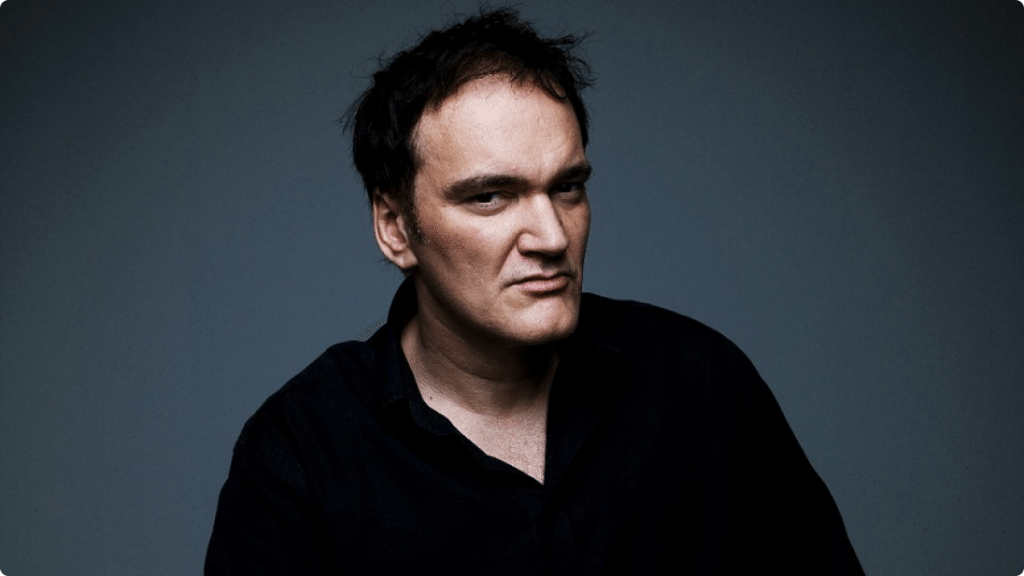
Quentin Jerome Tarantino. Where does one begin? From the violent action scenes to a twist in a diner, Quentin Tarantino has no limits. He has been working in the film industry for quite some time, as a writer, director, producer and more. He even has his own production company called A Band Apart, a name inspired by one of Quentin’s idols, Jean-Luc Godard. Quentin Tarantino made his debut with Reservoir Dogs (1992), which follows criminals in a jewelry heist that gets busted by someone who could be their own. From the start, Quentin has been making violent thrillers that attach viewers to the characters so realistically that they can’t help but be invested in the story line. Viewers remember a Tarantino movie, they have a “thing” about them that is so captivating. Since Reservoir Dogs was received so well, making a worldwide gross of $2,859,750, Tarantino was definitely a star on the rise, and Hollywood had no idea what was coming.

His next movie, Pulp Fiction (1994), is quite possibly his most iconic work. If you don’t know Ezekiel 25:17, do you even know Quentin Tarantio? This film was especially important because it was one of the first films to distort the linear storylines of movies. So from early on, his writing and directing skills have certainly shaped what it means to produce a work of art in the postmodern era. Since he has been working in this industry for about 30 years, people know what kind of movie to expect when they see his name. Expect non-linear storylines, references to current culture and past films, extreme violence, tributes to time periods and people, repetion of actors, and alternate endings. Quentin Tarantio knows himself, knows what he likes, and he knows how to make his visions a reality. He has left such an imprint on the industry that he has knowingly, or unknowingly, created a genre of his own. This genre is called “historical revenge”. It focuses on events that actually happened, takes place in time periods that are historically accurate, and he even uses real life characters to increase the realness of his movie universe. He has created an alternate universe that has experienced the same events as the world we know, but in this universe, his characters are usually the heroes and who end on top. Audiences know the true history, but they are granted relief knowing that maybe, in some other world, life was different. Specifically his films Inglorious Bastards (2009), Django: Unchained (2012), and his most recent blockbuster hit Once Upon a Time in Hollywood (2019) all fit in the historical revenge genre.
Inglorious Bastards, written and directed by Tarantino, is a war drama filled with action, violence, and satirical comedy. It follows a group of Jewish and American Nazi killing “bastards” as they plot to destory the Third Reich in an epic, brutal killing spree. Brad Pitt, Christoph Waltz, Michael Fassbender, Eli Roth, and Diane Kruger are just some of the talented actors in this movie. Despite some of it’s dialoug, Inglorious Bastards does have a deeper meaning than scalping Nazi’s. It is a message of how powerful film as a media can be in a society. During WWII, Germany’s propaganda was heavy in violence and of the support of the Nazi party. Films made in this period reflected the society in its worst traits. Even the movie that Daniel Brühl’s character Fredrick Zoller stars in is about being a war hero for the Nazi’s and the audience in the theater is very pleased by his violent acts. Movies that politically violent just had not been made popular in the U.S. yet. The film he stars in premiers at a theater that will be filled with leaders of the Nazi party and other political figures. However the theater is owned by a Jew, who will help the Bastards destroy the Nazi’s once and for all; in Tarantino’s universe at least. It’s historically accurate in the mise en scen and settings, but especially the characters. Hitler’s even in this movie, how more real could it be? The ending of the movie is where Tarantino really ties it up with a bow. The Jew who owns the theater hijacks Zoller’s film and puts herself in it to relay a message to her audience. She says they will all die, and with the flick of a cigarette, a pile of film behind the screen catches on fire, and proceeds to completely destroy the theater. The Bastards left inside the theater get to blow Hitler’s face off and get the satisfaction of knowing they ended the war. The audience experiences this event with satisfaction as well, knowing that real-life killers get what they deserve.

Something viewers have learned from Tarantino’s movies, is that revenge is best served hot, with a side of extra flames. His movie titled Django: Unchained solidifies his genre of historical revenge. This spaghetti western inspired film follows a slave named Django as he and a German bounty hunter look to save Django’s wife, Broomhilda, from a notoriously violent plantation owner, Mr. Candy. It stars familiar faces like Samuel L. Jackson and Christoph Waltz, as well as new faces like Jamie Foxx and Leonardo DiCaprio. This movie takes place two years before the civil war, and deals with the brutal reality that once was apart of the United States. Although this film sparked controversy of Quentin’s true intentions of the film, it was one of the first films to accuratly depict the violence that came along with slavery. People questioned why the film was littered with comedy, because slavery is a shameful part of America’s past. Especially with political movements today such as Black Lives Matter, it’s not something that people can just talk about; for good reasons. It wasn’t going to be Twelve Years a Slave, the audience should’ve know Quentin’s style by now. He shows a lot of unsettling experiences that viewers remember, and that’s his kind of movie. But he also gives viewers gratification that history could’ve been different. Django gets revenge and then some by the end of the movie, so what does it matter if everything is historically on the nose? His characters in his universe got what they deserved, good and bad. It’s a re-telling of slavery in the slaves favor. And just like Inglorious Bastards, this movie ends with Mr. Candy’s plantion going up in flames, symbolic of the fact that slavery will eventually go up in flames, and life will never be the same.
Notice Mr. Candy’s (Leonardo DiCaprio) bloody hand, that is a real cut and real blood, but Leo kept going, so the camera kept going.
His most recent film, Once Upon a Time in Hollywood, is a personal revenge story from Quentin’s personal wishes. In 1969, the world of Hollywood was completely taking a turn. The story follow Rick Dalton (played by Leonardo Dicaprio) a fading actor who can’t keep up with the transition from television to movies at the turn of the 60’s. His stuntman Cliff Booth (Brad Pitt) also is affected by this transition because if Rick doesn’t have a job, neither does Cliff. The two buddies cruise around Hollywood, trying to keep themselves relevant, but they fail to understand the youth cultures demand and influence that was shaping the industry. While Cliff and Rick have their lives taking place, Quentin also has another story line running through the movie, which is the story of the Manson family murders. The audience is introduced to Sharon Tate, Roman Polanski, and even shows Spawn Ranch, where in actual reality the Manson family resided.
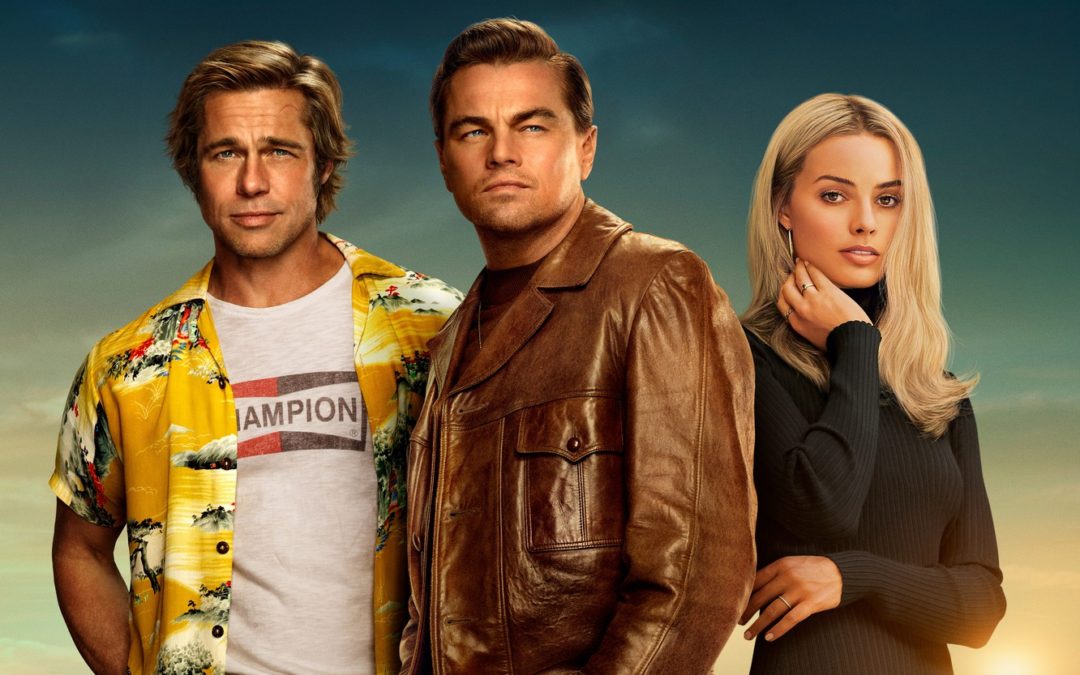
As an upcoming actress in the new Hollywood, Sharon Tate contrasts completely to Rick Dalton’s character, as he symbolized the death of the Golden Age of Hollywood. This movie is packed with tributes to movies, T.V. shows, actors, places, events, practically everything going on in Hollywood and Los Angeles in 1969. Tarantino said that this movie was a love letter to Los Angeles, as he was 6 in 1969. His childhood revolved around this era, and has clearly shaped him into the artist he is today. In our society, something as brutal as the murder of an almost 9 month pregnant movie star and her friends, will never be forgotten. Audiences know the fate of Sharon Tate, but in Quentin’s universe, things turn out for the better. Members of the Manson family enter Rick’s house instead of Sharon’s house, and decide to kill everyone inside as well. They have no idea what they got themselves into, but boy did they get their butts kicked. Faces mashed in, a dog attack, and a flame thrower; all things Quentin has touched on before in his films, make their appearance in his characters favor yet again. Rick and Cliff kill the real life killers, and Sharon Tate lives. This movie falls in the historical revenge category because of the fact that what happens in the movie favors Quentin’s characters and gives proper justice to real-life events and people. History occurred different in Tarantino’s universe, and it leaves the audience with a triumphant feeling knowing things played out differently.
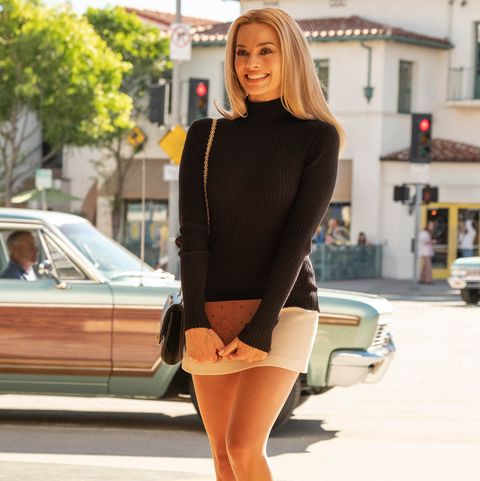
So if Tate and the other victims had lived, who knows what Hollywood would’ve been, or where the direction of society would’ve gone. Tate’s death symbolized the end of the swinging 60’s, and birthed a harsher and more violent culture in media in the 70’s. Those events impacted the world so much that they are still talked about and remembered as one of the most brutal acts ever committed. But for 2 hours and 41 minutes at least, we are given a look at what life would’ve been if things were just a little different. Even though Cliff didn’t exist, he still was able to get revenge on the twisted Manson family, and helped change the course of history in that Universe. Django didn’t exist either, but he was able to get his revenge and stand up to slavery and everything it stood for. Although the Bastard’s were inspired by real people, they never existed how they did in Inglorious Bastards, but they got revenge on the Nazi’s for the whole world: Hitler was killed and the war ended! In Tarantino’s universe, anything is possible. But what makes his genre of historical revenge so powerful and unique is that it erases the true events of the past and sucks viewers into this province, where they are granted a second chance on viewing monumental events. Tarantino does a favor by creating these movies by allowing the audience to not think about the truth, but to focus on the “what if’s” if these events were reality. To have such serious events in history like the these films address: slavery, the Manson Murders, and WWII played out cinematically in a way that differs from reality, ensures constant reminders and remembrance, because these such events deserve to have the attention of the world forever.
Works Cited:
https://www.imdb.com/title/tt7131622/?ref_=nm_flmg_dr_2
https://www.imdb.com/name/nm0000233/
http://thenewbev.com/blog/2019/09/once-upon-a-time-in-hollywood-round-table/
https://birthmoviesdeath.com/2019/09/30/once-upon-a-time-in-hollywood-the-final-rodeo



 Introduction to Film Studies - Fall 2019