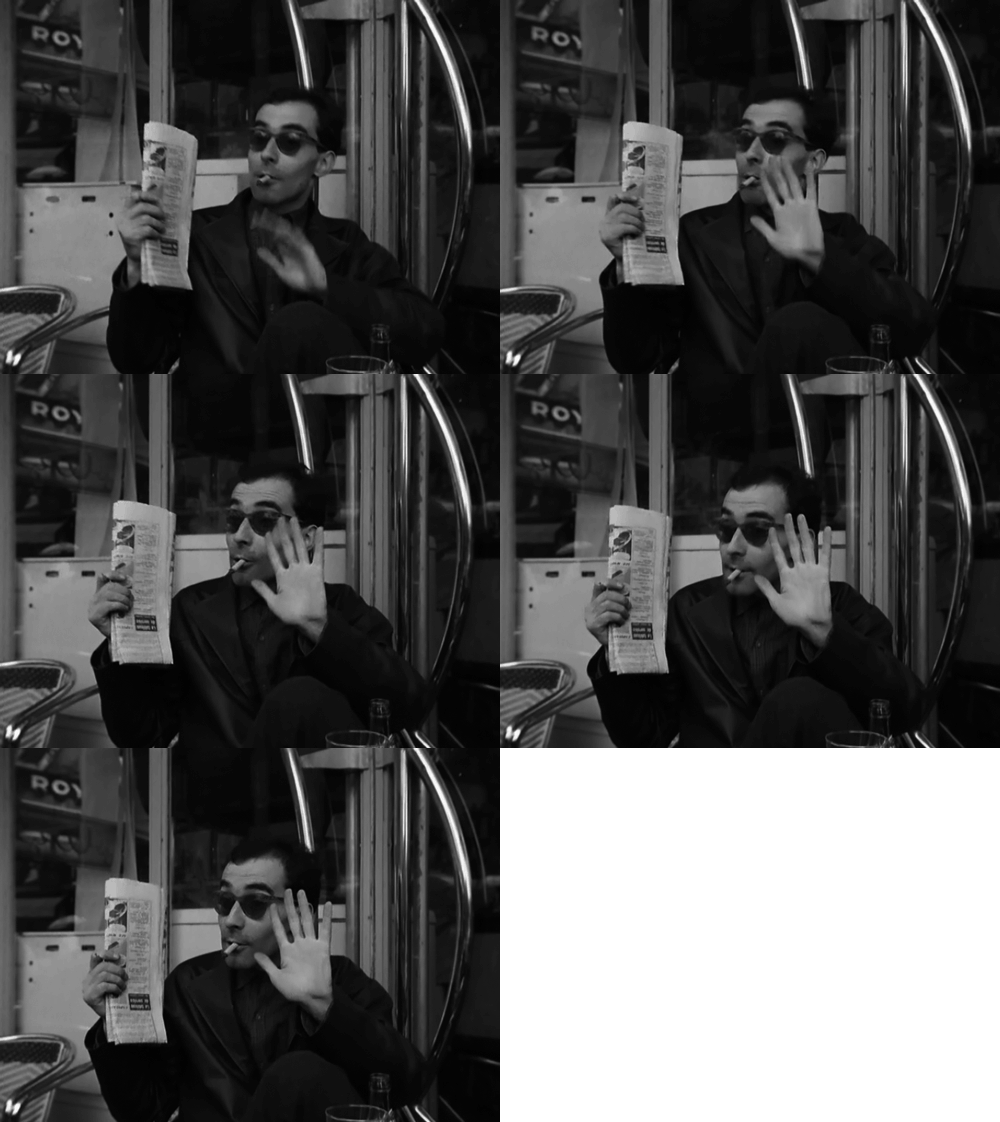
The auteur theory arose in France in the late 1940s, fathered by the cinematic theories of Alexandre Astruc and André Bazin, and advanced by Bazin’s Cahiers du cinéma. The theory credits the director as the chief creative force of a film, much like the author of a book. Jean-Luc Godard, an icon of the French New Wave movement and theoretician of Cahiers du cinéma, is the poster-child of the auteur theory.
Godard’s films are drenched in a discernable style—his signature is plastered all over his films. To demonstrate Godard’s embodiment of the auteur theory, I will refer to four of Godard’s films.
- Pierrot le Fou (1965)

- La Chinoise (1967)
- Une femme est une femme (1961)

- Made in U.S.A (1966)
.jpg?bwg=1547234500)
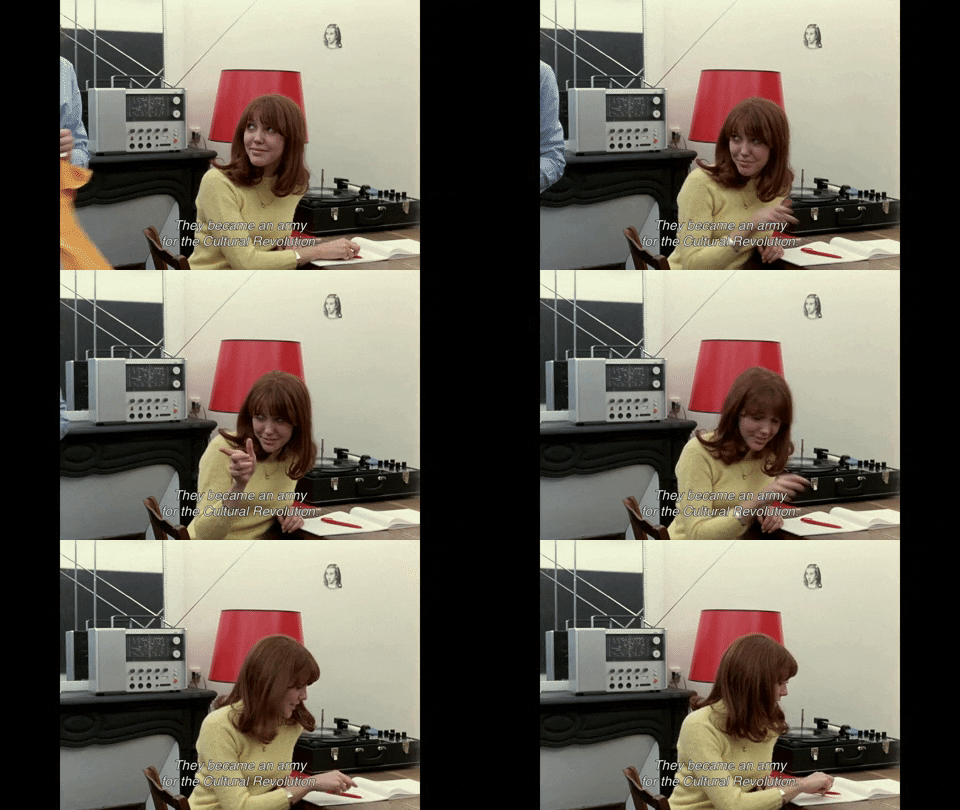
Godard’s mise-en-scene and highly-stylized use of color is an integral element to his cinematic style, despite Breathless (1960) being in black-and-white. Godard was one of the first directors, if not the first, to use color as a stylistic tool rather than a technological appeal. Throughout the majority of his films—namely Pierrot le Fou, La Chinoise, and Made in U.S.A—there is a reoccurring use of primary colors that are impossible for a viewer to miss. The blues, reds, and yellows jump out at you and scream style and French New Wave. The use of these colors is one of Godard’s greatest signatures and is very indicative of his style.
A great example of Godard’s artful use of the color palette is the party scene in Pierrot le Fou, where Jean-Paul Belmondo’s character Ferdinand Griffon wanders from room to room at a party. Each individual shot is painted with a singular color that dominates the screen, painting a deconstructed rainbow of blues, reds, yellows, and greens. As we see a disinterested Ferdinand move from room to room, the overwhelming presence and domination of the colors in the shots are a doorway into Ferdinand’s dissociative state—the viewer feels removed from the scene, much like Ferdinand at the party.
A famous remark made by Godard on his use of color in films emphasizes his prioritization of color in his mise-en-scene. When asked by an interviewer why there was so much blood in Pierrot le Fou, Godard replied, “Not blood, red.”
In an attempt to illustrate Godard’s use of color as a stamp across his films, here are stills taken from Pierrot le Fou, La Chinoise, Une femme est une femme, and Made in U.S.A:

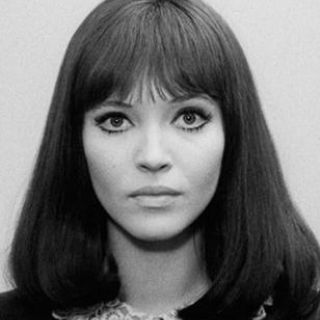
Another one of Godard’s stamps is what later became known as a “Godard Girl.” The Godard Girl was a reoccurring type of female character in Godard’s films—Anna Karina’s character Angela in Une femme est une femme, Anne Wiazemsky’s character Veronique in La Chinoise, Anna Karina’s character Marianne in Pierrot le Fou, and again (she was, after all, Godard’s muse) Anna Karina’s character Paula in Made in U.S.A.
The Godard Girls famously played female characters with intense onscreen presence. The Godard Girl style later became influential in the fashion world, but that’s not what made them iconic in his films—it was the self-assurance of their characters. In a 1969 interview with Rolling Stone magazine, Godard said about the Godard Girls, “I don’t think you should feel about a film. You should feel about a woman, not a movie. You can’t kiss a movie.”
A central theme in all of Godard’s films is some form of realism, no matter how absurd this realism might be presented. Godard believed that realism was a crucial part of film-making. He often made his actors improvise scenes. The characters in Godard’s films often reflected his inner-contradictions, and these inner-contradictions are littered in the dialogue of his films.
- In Pierrot le Fou, Ferdinand says, “Life may be sad, but it’s always beautiful.”
- In Made in U.S.A, Paula says, “My silence has the same effect on him as my words. My leaving disturbs him as much as my presence. My indifference can be his undoing as much as my involvement. My sometimes rash concern can be fatal to him.”

Godard’s approach to filmmaking was, in the 1960s, rebellious and revolutionary. No filmmaking rule held him back—he saw one, he broke it. Godard broke the rules in a Brechtian approach; the interpretation of his films are left in the hands of the viewer. Godard frequently broke the fourth wall to communicate with the audience. He would often leave in the seconds before he called action in a shot. Sometimes, the musical score would be cut at unexpected times. La Chinoise is full of these aforementioned broken rules, more so than Godard’s other films.
A Godard film is not difficult to identify without his title present. His films are snappy, full of adventure and character. Godard’s use of colors may be the easiest way to identify his films—his biggest signature post-Breathless. If not that, his habitual rule-breaking. Godard is an auteur, through and through. There may be an entire team working on a movie, each person with great contributions to a film. But it is Godard’s filmmaking philosophy and risktaking that makes him the author of his cinematic book.
 Introduction to Film Studies - Fall 2019