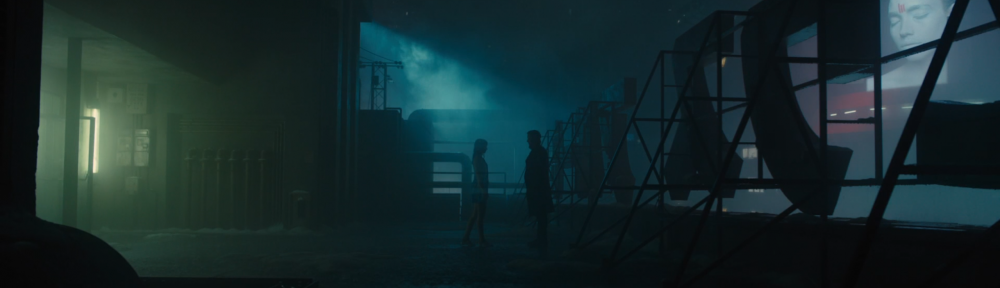
American screenwriter, director, and producer Sofia Coopola is the only daughter of documentarian Eleanor Neil and filmmaker Francis Ford Coppola– famously known for The Godfather films. Sofia has a brief acting career as a background character as a young girl in her fathers’ movies but quickly faced negative reviews. Sofia holds a creative background, she is a fashion-label owner, and photographer, and her artistic style is carried well throughout her films. With her coming of age drama The Virgin Suicides, Sofia made her first feature-length debut. Throughout her filmmaking career, she has become known for her unique signature within her films which all consist of aesthetically pleasing fashion. It is said that Sofia’s films force viewers to feel an experience instead of just passively watching. Through pastel colors, gestural camera movements, modern soundtracks, and montages of exquisite imagery, a world of mise-en-scene is generated. Sofia often deals with a protagonist in crisis, someone who is trying to understand or fit into a cruel world. Another theme Sofia works with is the idea of the female as an outsider and a youthful rite of passage through lifestyles and rituals.
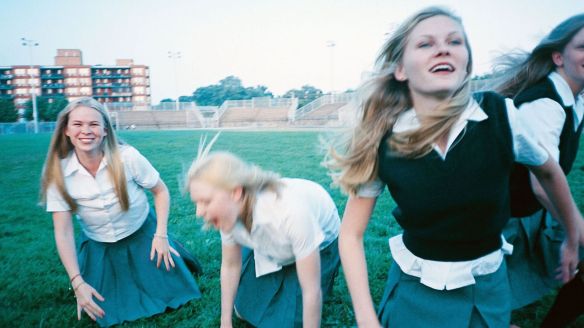
The Virgin Suicides (1999), based on a novel by Jeffrey Eugenide was adapted into a beautiful yet sinister film following the story of five girls, the mysterious Lisbon girls, and the perspective and obsession of them by a group of neighborhood boys. The Lisbon girls adhere to American highschool rituals such as homecoming, parties, first kisses, and the loss of virginity. Spoiler alert; all five girls commit suicide. Elements of mise en scene like the lighting and décor/props of each scene create a definite mood and feel throughout the film. There aren’t any harsh lights or dim lighting- the scenes are average and static. The Lisbon girls are shown as very sheltered, safeguarded by their parents who live uninteresting and boring life, which directly enhances the lighting and décor/props the Sofia chose. Long takes and close up camera shots allow us to see into the character’s lives, assisting a feeling of alienation. One of the Lisbon girls is played by well-known actress Kirsten Dunst. Dunst also appears in Sofia’s film Marie Antoinette.
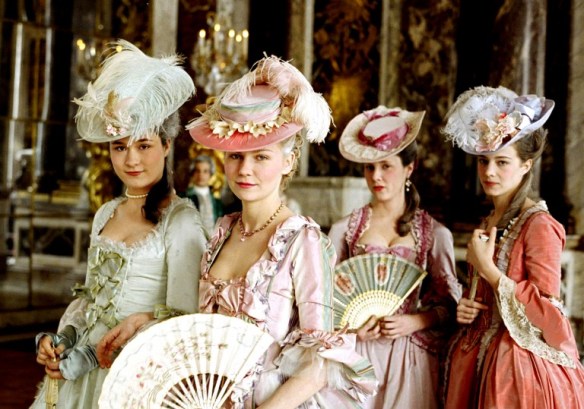
Marie Antoinette is a film directed by Sofia which focuses on the 18th century infamous last queen of France… Marie Antoinette (played by Kirsten Dunst). This film is yet another of Sofia’s to focus on the female figure. An intense Punk and New Romantic soundtrack is sharply edited to intimate close-ups and point of view shots. One scene in particular exhibits a camera that endlessly and aggressively pans in an attempt to emphasize the gossiping atmosphere of Versailles. Color, costuming and materials depict this story. Many pastels, bright pinks, and blues in its backgrounds were used towards the beginning of the film to show Antoinette’s innocence. However, as time progressed the colors grew darker to show growth and maturity. Another scene uses the setting to show Marie in despair, the camera views her as insignificant as everything around her in the shot is so large. Marie is in constant crisis, she is under intense pressure as a 14-year -old girl at that time. Other themes Sofia tends to explore are along the lines of class, status, and materiality.
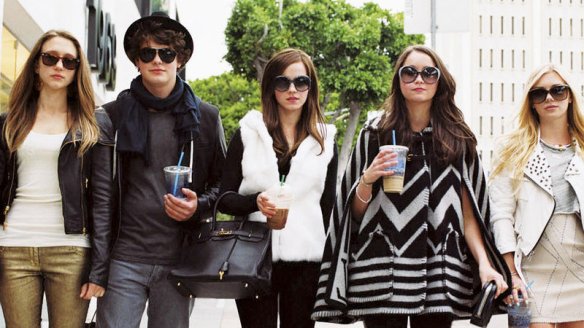
More recently, Sofia’s film The Bling Ring is based on true events where a group of fame-obsessed teenagers use the Internet to track the location of celebrities, break into their homes and steal as much as they could. Using fashion, cityscapes, this film focuses on themes of wealth and fame- often a lifestyle that leads to isolation or detachment within characters. The gang of teenagers were able to steal several million dollars in jewelry and clothes which they kept for themselves. None of the characters were content with being wealthy, they desired the lives of the super-rich. There is always someone to envy. The Bling Ring is Similar to Marie Antoinette, with montages combined with close-ups of luxurious items and materiality, with long shots framing pastel-colored, energetic scenes when the teens are trying on expensive clothing. The props and settings of each teenager’s large home their parents bought and maintain often consisted of nothing but large, empty, colorless spaces. This type of decor emphasized a dull and uninteresting existence, which most likely prompted the gang to rob. At the end of the film, each member of the friend group begins to turn on one another. While being interrogated, distance and discomfort is expressed through medium-long shots that emphasize the isolation between the characters.
 Introduction to Film Studies - Fall 2019