Meg Condie
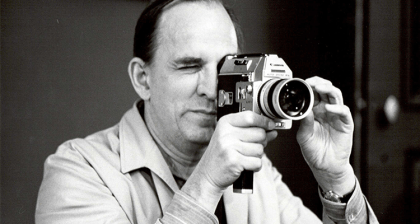 Ingmar Bergman was a Swedish Writer and Director, who made about 50 films over the course of more than 40 years. Bergman focused on two main themes in his work- the relationship between men and women, and the relationship between man and religion, or more specifically, the image of god and man’s battle with God. He was the first filmmaker to bring existentialism, religion, and death to the screen. In his work, you can find many themes of Bergman’s own life, and in these films the minds of both the characters and the viewers are constantly seeking, and constantly surprised or puzzled by their findings. Much like in his own life, in his films he dealt with pain, tormentation, love, evil, and religion. His characters are often seen as being prisoners of their own minds, ideas, or desires. These existential, soul searching films make up the richest and most intriguing group of films in cinema history.
Bergman created an extensive body of work, which to many people, proved him to have brought a new seriousness to the way films were made and viewed in the 1950’s. He made his way to the film scene on an international scale in the 1950’s with four films which signified the turn of his career. These four films, “Smiles of a Summer Night,” “The Seventh Seal,” “Wild Strawberries” and “The Magician” all bear pieces of bergman’s life, his thoughts, his guilts; they each have been metaphorically stamped with the style in which Bergman created. He himself even would often admit that his work was autobiographical, however it was “in the way a dream transforms experience and emotions all the time.” These aspects are most apparent in two of my favorite Bergman films which re routed his career “Smiles of a Summer Night” and “Wild Strawberries”
“Smiles of a Summer Night” (1955) was a film which touched upon ideas of desire, guilt,
and adultery. Unusual for Bergman, it falls under the “comedy” genre. There’s a big love circle in the film essentially; a middle-aged lawyer in Sweden (Frederick Egermen) is in a two year marriage with a nineteen year old girl (Anne) The two have yet to consummate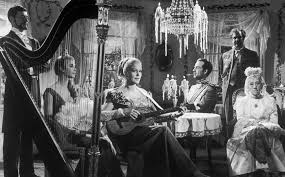 their marriage, and Anne finds herself being drawn towards Frederick’s son (Henrick, also a young virgin) however, Henrick finds himself interested in the maid (Petra) making awkward flirtatious passes at her on his mission to lose his virginity. Then we meet Desiree, a past lover of Frederick, who is having an affair with another married man (Count Carl-Magnus Malcolm). The Count’s wife (Countess Charlotte Malcolm) whom by permission of her husband can have affairs as she pleases, and who happens to be a friend of Anne’s. This group of people spend a night together at Desiree’s mother’s house, and throughout this night the characters experience an array of interactions and emotions with one another, causing them to feel the need to look within themselves to find answers about desires, morals, and guilt. The theme of adultery is pulled directly from Bergman’s life; Adultery was the great subject of many of Ingmar Bergman’s films as he was married five separate times, having had affairs throughout each of his marriages, often with the actresses he was working with. The guilt within himself may be shown when one line in the film reads “Men are horrible, vain and conceited. They have hair all over their bodies.” He experienced immense guilt surrounding his infidelities, which he worked into many of his films. The photography of “Smiles of a Summer Night” was done by Gunnar Fischer, who was, along with Sven Nykvist, one of the cinematographers that Bergman almost always used. This was another aspect that made his films distinguishable from any other filmmakers of the time.
Bergman’s “Wild Strawberries” (1957) follows the travels of an elderly medical scientist (Isak Borg) as he is on his way from Stockholm to Lund to accept an honorable doctorate. The film opens with a dream sequence that has acquired a great deal of fame and been referenced often since it was produced. In the scene, Isak arrives at a house with b oarded up windows in Stockholm. He sees a clock with no hands and an old hearse approaching, as one of the wheels of the hearse hits lamppost and a coffin falls out. The outstretched hand of the corpse from inside the coffin tries to pull Isak inside. This scene is a perfect example of how many of Bergman’s films have the viewers constantly puzzled. He travels with his daughter-in-law, and on this 400 mile journey, Isak remembers different parts of his past, shown in flashback sequences, such as the girl he loved at a young age who ended up marrying his brother. Isak is brought to the attention of his own wrongdoings throughout his life, leading up to my favorite scene in the movie, where Isak has reached his destination to accept his doctorate, but is instead is found at some sort of trial. He is told “You have been found guilty of guilt”. Isak is full of guilt that is caused from his life long tendencies of self indulgence
 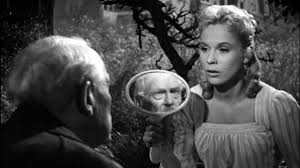 and bitterness, which Bergman wrote to comment on parts of own life, specifically pertaining to his father as he once stated “I had created a figure who, on the outside, looked like my father but was me, through and through”. Bergman’s father was a priest, and has proven to have a large enough effect on Bergman to inevitably influence many of his films like “Wild Strawberries”, which has extensive religious connotations bringing up ideas of death, repentance, and the way in which God shows himself.
Bergman, now past away, continues to carry his reputation of being on of the most influential filmmakers from his time, and possibly throughout cinema history. The way that he wrote his own life and thoughts into his films through portraying ideas of love, pain, desires, guilt, and religion is something that still influences filmmakers today. Bergman explored the human condition, and on this exploration found bleakness and despair, as well as touches of comedy and hope.
 Introduction to Film Studies - Fall 2019