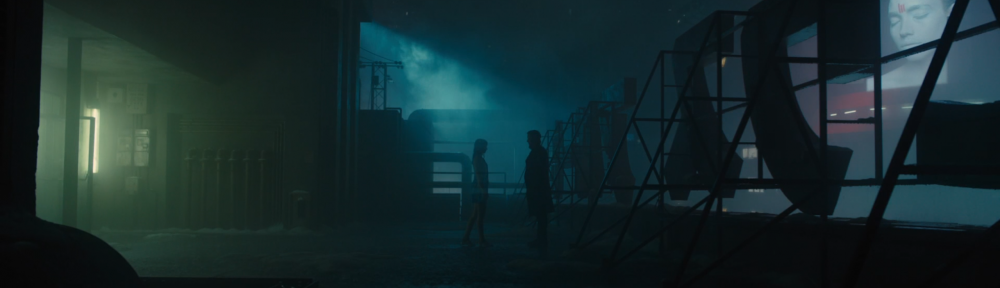
Auteur theory is a theory that looks at directors as the main creative force behind a film. This is because the director is able to directly control as many elements as possible, like, camera angle, lighting, blocking, and scene length. The theory relies on the acceptance that these elements convey the message of the film more than the plot of the movie itself. The director is then considered the author of the film because they oversee all of the audio and video aspects. David Lynch is a prime example for applying auteur theory because his films have consistent themes, imagery, and actors. Above all he holds takes great care in the films he makes as he is usually the writer, producer, and director of his movies.
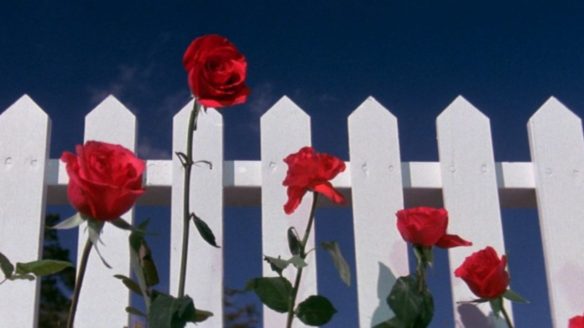
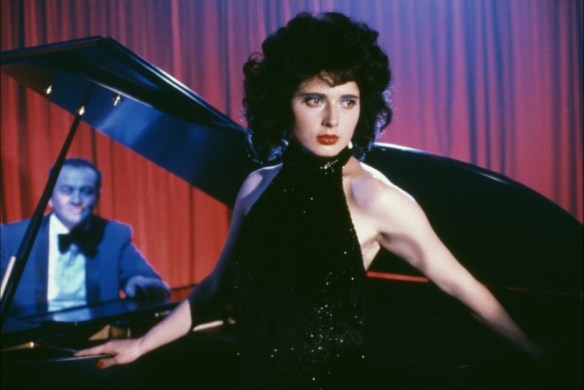
David Lynch seems to focus on two main themes in his work, that is, parallel worlds and biology. Parallel worlds is a theme that is explored in Eraserhead, Blue Velvet, Twin Peaks, and most of his other work. Eraserhead explores the area behind the radiator as a parallel universe accessed via a dream. Blue Velvet’s main conflict arises in the nightclub, the Slow Club, where Dorthy Vallens is a lunge singer. This space acts as the dream like parallel world in Blue Velvet and it is where Jeffrey Beaumont makes most of his basic discoveries about Dorthy and Frank Booth, Dorthy’s abuser. The town as a whole is also a sort of parallel world where during the day it is the perfect small town America but at night then the darkness really descends on the town. Twin Peaks parallel dream world is the Black Lodge where Bill lives. The Black Lodge is available to Cooper and Laura through dreams and eventually through a more physical and mental transportation.
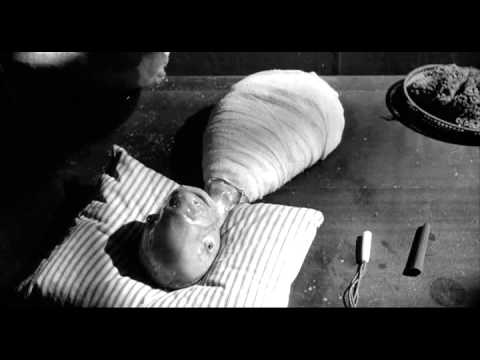
Biology is another dominant theme in Lynch’s work. In Eraserhead Lynch manages to make every worm like creature resemble either a sperm or an umbilical cord. Blue Velvet shows sex in a way that is problematic, distasteful, and animalistic. The majoirty of the sex scenes are rape or not expicilty consentual. Eraserhead shows sex in a way that is deglorified with the depiction of his baby. There is also a fascination with deformities that Lynch exhibits. The Elephant Man is an obvious display of his obsession with biology and a morph of the “usual” biology. Twin Peaks has its fair share of biological oddities with the inclusion of the One Armed Man and the giant.
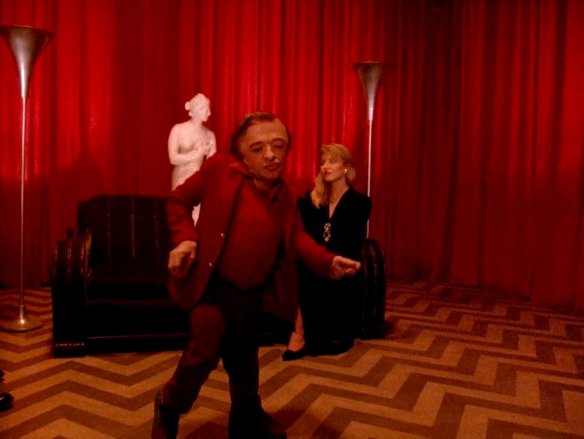
The mise-en-scene and imagery that is employed in many of his films is consistent. Lynch went to school for art and this has had an everlasting effect in him as a director. In Blue Velvet the lightning goes from high-key to low-key as the time of day changes. When Jeffrey Beaumont is walking through the neighborhood he is surrounded by bright flowers and high-key lighting. However, when he is involved in any scene with Dorthy or Frank there is a shift to a grimey low-key lighting. It symbolizes a theme in Blue Velvet about things not appearing as they are, how a town so familiar can seem so perfect and then one day you find an ear in the yard and are pulled into a wave of crime. Twin Peaks thrives on a mix of nostalgia and crime. The nostalgic effect comes from the use of 50’s style living. An example of this is the RR Diner or Big Ed’s Gas Station. These backdrops start to create a depiction similar to the 50’s where everything was “easier” and “better”, this allows Lynch to explore his darker themes. The mise-en-scene is used to create the myth of small town America, a place where everything is ideal and nothing bad happens. Eraserhead takes place in some sort of post-apocalyptic or dreamlike world. This effect is achieved by the mise-en-scene of the film. Everything that should be seen as happy like meeting potentially new family members, eating supper, or having a child is twisted and distorted by Lynch. He uses low-key lighting to make the viewer feel as stuck and pressured as Henry himself does.
David Lynch is clearly an accomplished director, writer, and producer, and it’s also quite clear that he has put his own distinct style into each film that he has made. Lynch is so well known that the term Lynchian is now used to describe his style. David Foster Wallace puts it best “An academic definition of Lynchian might be that the term ‘refers to a particular kind of irony where the very macabre and the very mundane combine in such a way as to reveal the former’s perpetual containment within the latter’. But like post-modern and pornographic, Lynchian is one of those words that’s ultimately definable only ostensibly – i.e., we know it when we see it” Lynch transcend genre and that is part of the Lynchian thought, this makes David Lynch a true “auteur”
 Introduction to Film Studies - Fall 2019